Worldwide public release
International, US, UK, Europe, Canada and Australia routes are live with persistent market choice.
Render Roll is a live international 3D product-rendering website that qualifies scope before payment. It combines clear packages, model-first intake, regional currency and language routes, safe file handling, CRM-ready data, consent-aware analytics and technical search foundations that passed the launch checklist. The intended operating context is Commercial website, intake, regionalisation, analytics and search. Thomas's role was Product director, creative director and platform builder. The case follows the product from its main operating problem through Worldwide public release, Qualified order path, Working enquiry evidence, then connects each interface to a working feature and control. The evidence comes from live routes, controlled enquiries, build audits and production performance checks. It also records what failed, what changed and how privacy, evidence or approval boundaries are handled. The limit is explicit: launch and system evidence, not a revenue or customer-volume claim.
A direct account of the operating constraint, the product decision and the limits of the evidence.
Product rendering depends on usable 3D geometry. Photographs or drawings can explain a product, but they do not remove the modelling stage. A public checkout that ignored this dependency could accept the wrong scope, create expectation problems and turn every exception into manual support.
The service also needed to work across several markets without inventing foreign offices or allowing price, spelling, currency and analytics state to drift. Uploaded model files required a safe lifecycle, and public pages needed enough detail for buyers and search systems without exposing private commercial operations.
Render Roll uses a model-first journey. Public packages explain rendering scope. The builder asks whether an approved model exists. Files and requirements are validated before a private payment link is prepared. One market price book and regional routing keep the public story consistent across currencies.
| Primary job | Turn a product catalogue into a clear, qualified rendering order. |
|---|---|
| Core gate | Each base product needs an approved CAD or 3D model before rendering can proceed. |
| Markets | International, United States, United Kingdom, Europe, Canada and Australia routes. |
| Commercial path | Public information and quote intake first, followed by an approved scope and payment handoff. |
| Search estate | Regional canonicals, hreflang, FAQs, schema, sitemap, LLM context and consent-aware measurement. |
These are observed properties of the working system. They are not claimed percentages, revenue attribution or a guarantee of future performance.
International, US, UK, Europe, Canada and Australia routes are live with persistent market choice.
No unconditional public checkout bypasses model and scope approval.
Controlled enquiries and protected test uploads completed the intended website path.
Titles, body copy, FAQs, schema, canonicals, hreflang, sitemap and submission checks passed.
Consent-aware analytics records the quote submission path without retaining enquiry references in page locations.
Authenticated performance checks remained strong across mobile and desktop routes after the final release.
Every image preserves the interface purpose and control logic while replacing live people, projects, records and values with staged data.
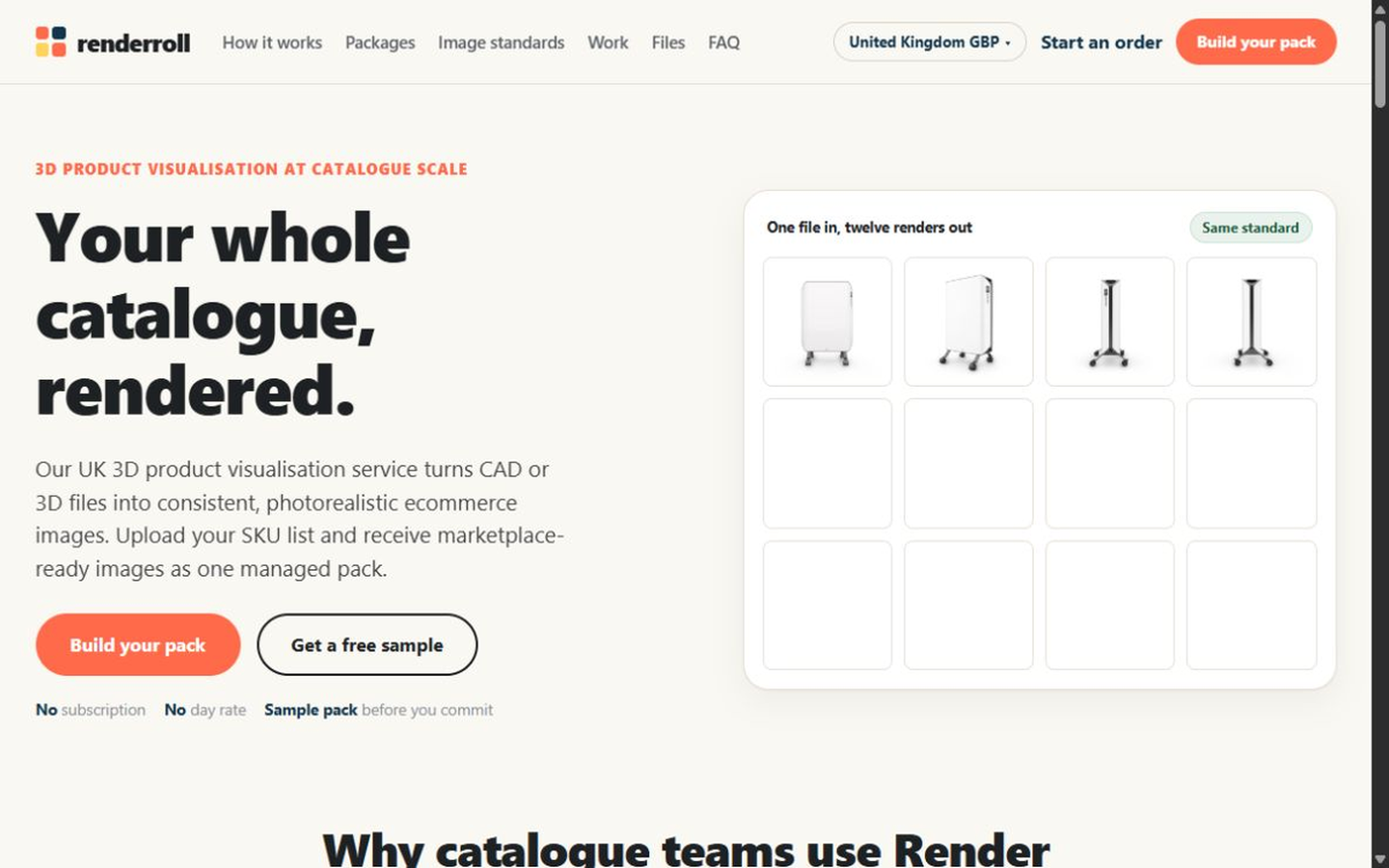
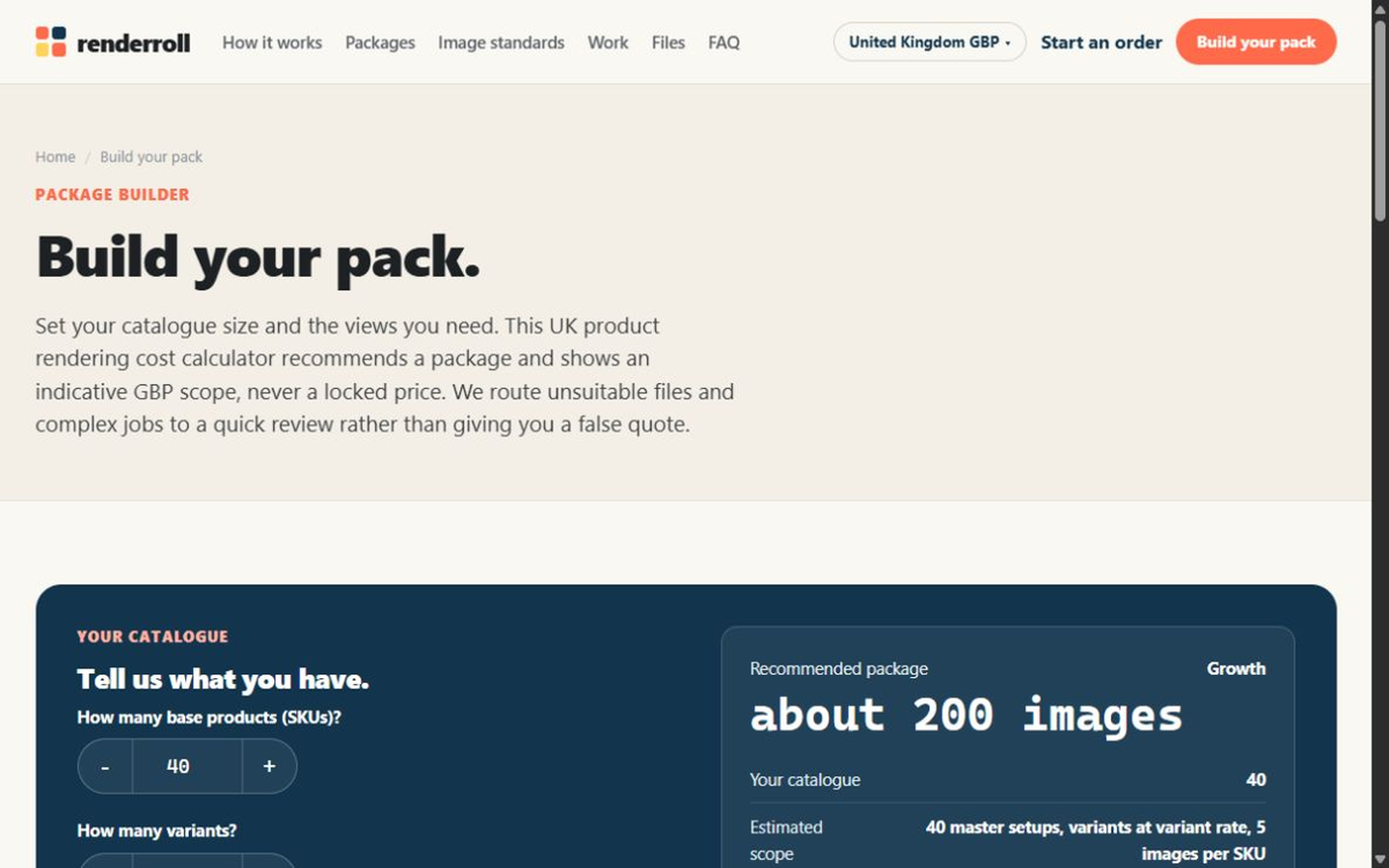
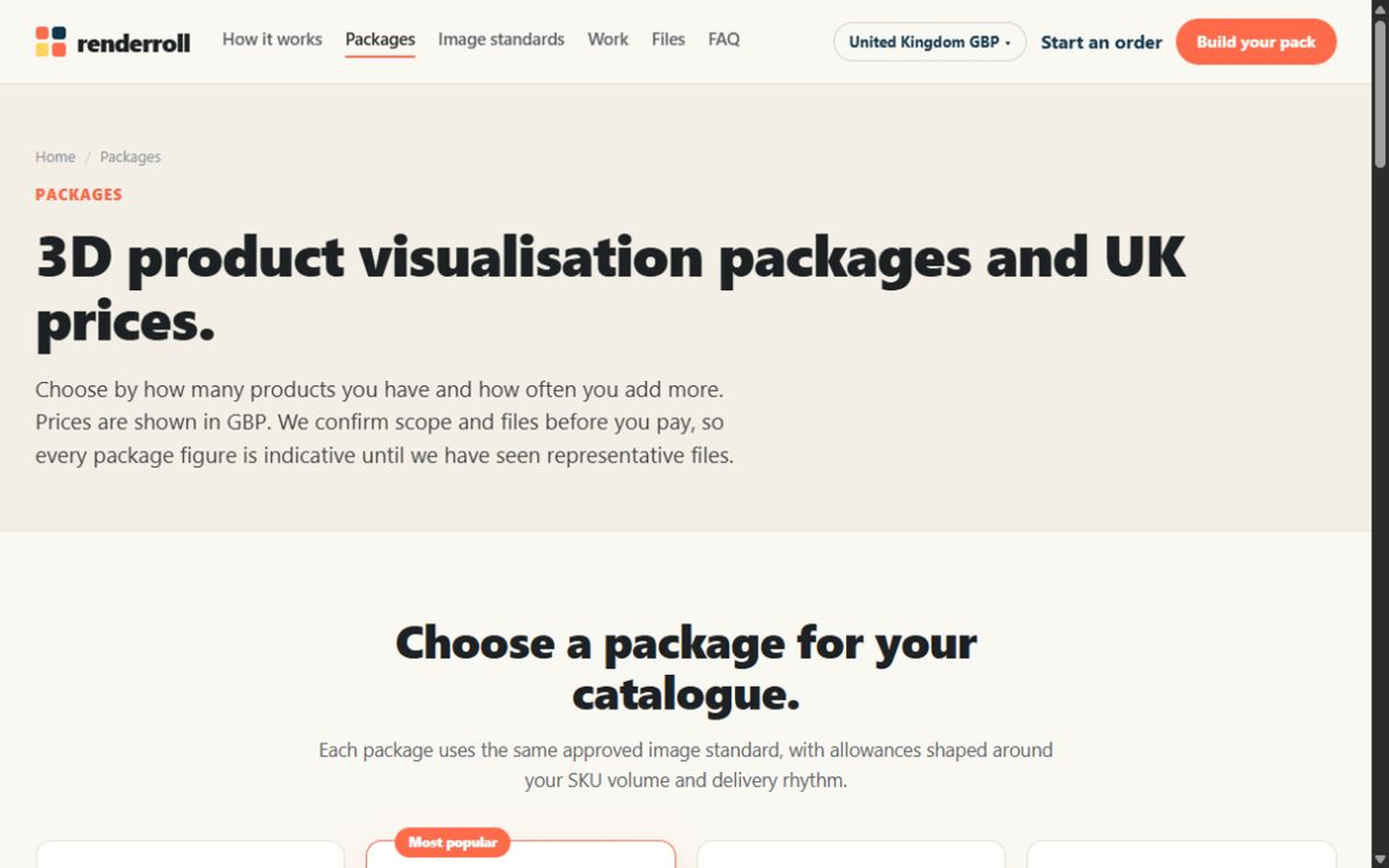
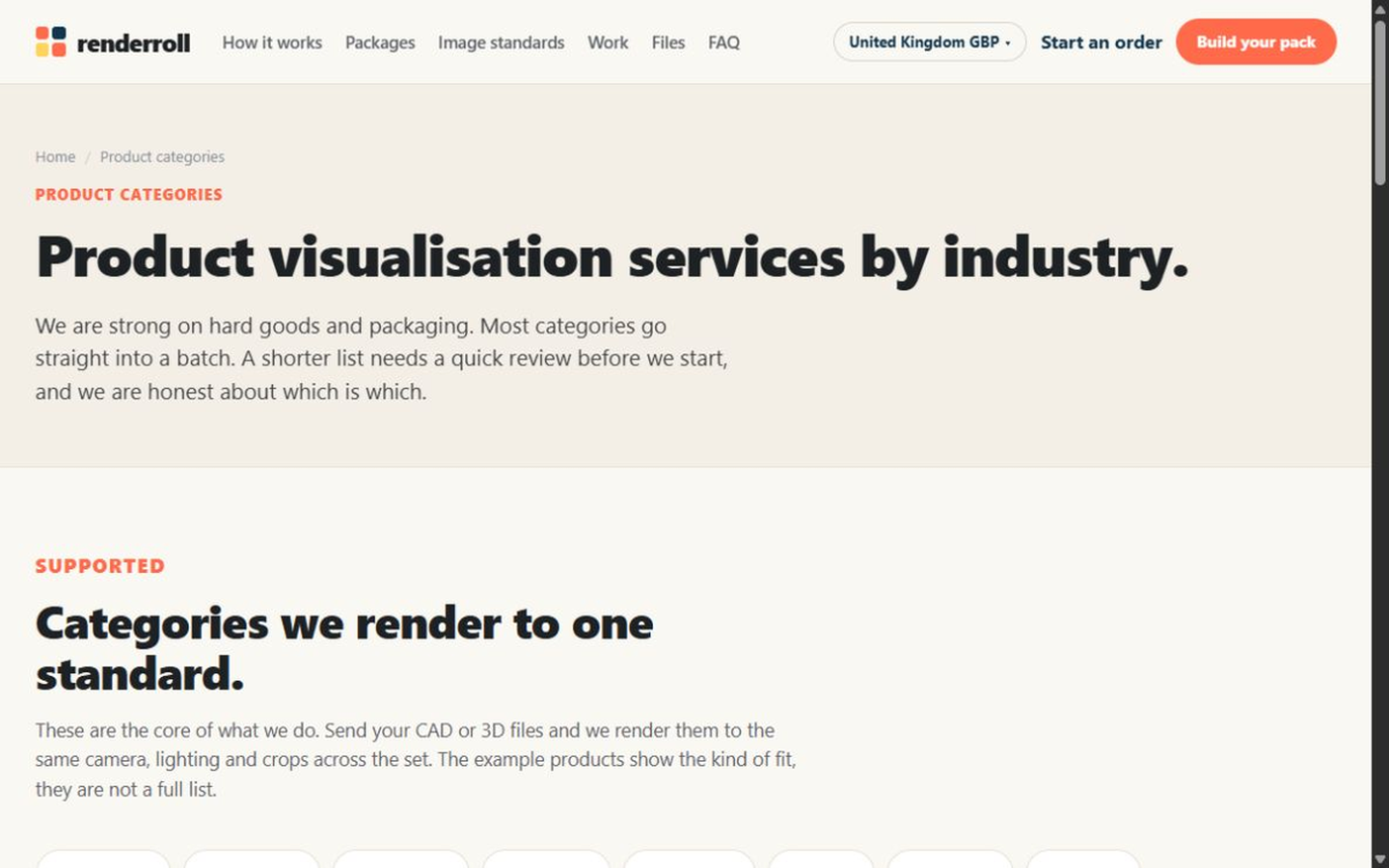
Each entry links to the exact view it describes. Product captures and explanatory diagrams retain their own evidence labels.
The direct public route shows the released premium service direction.
The direct public build route explains the approved-model qualification gate.
The direct public package route explains scope and product variants without customer data.
The direct public market route shows regional service routing.
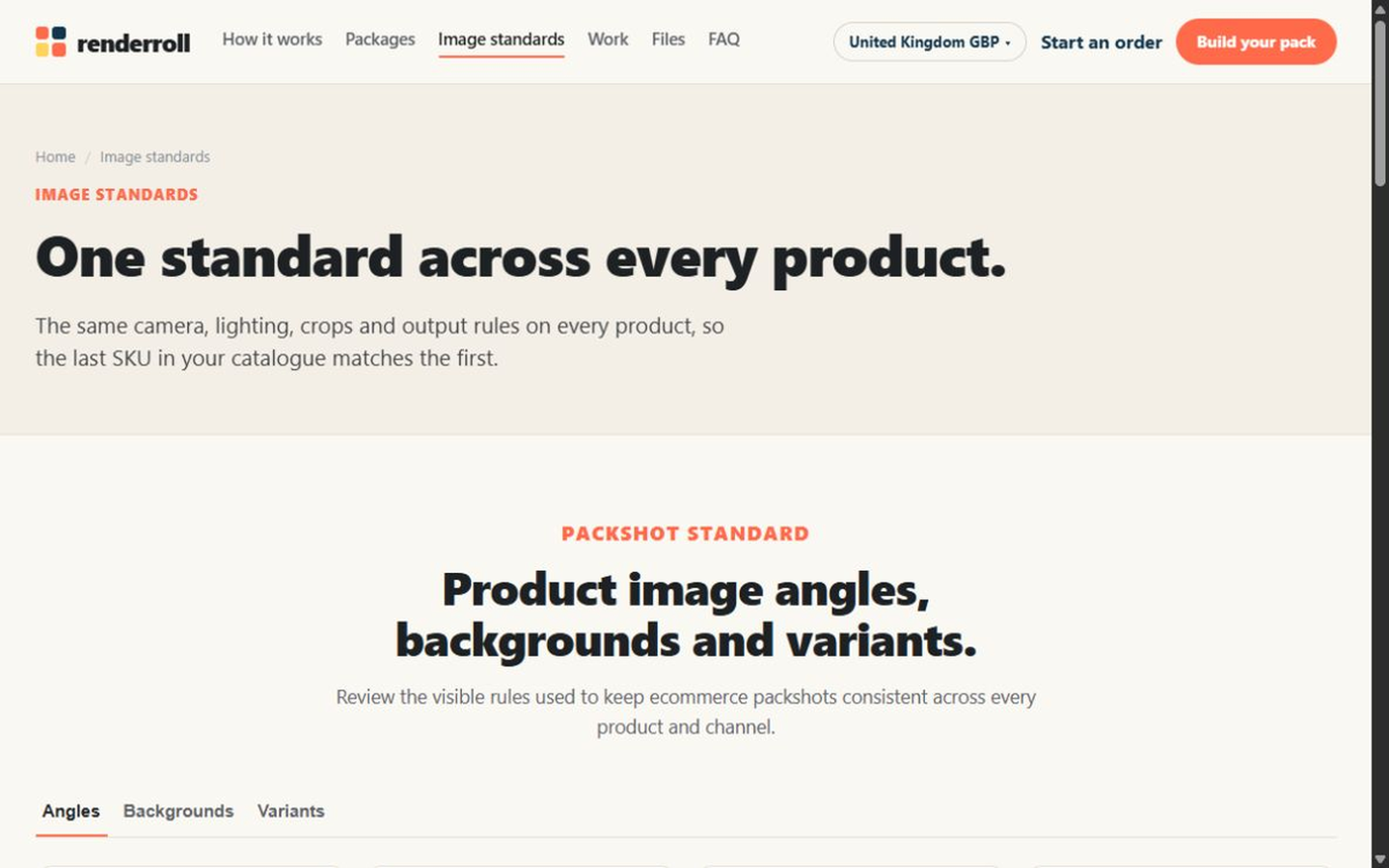
The direct public standards route connects ecommerce requirements to repeatable production quality.
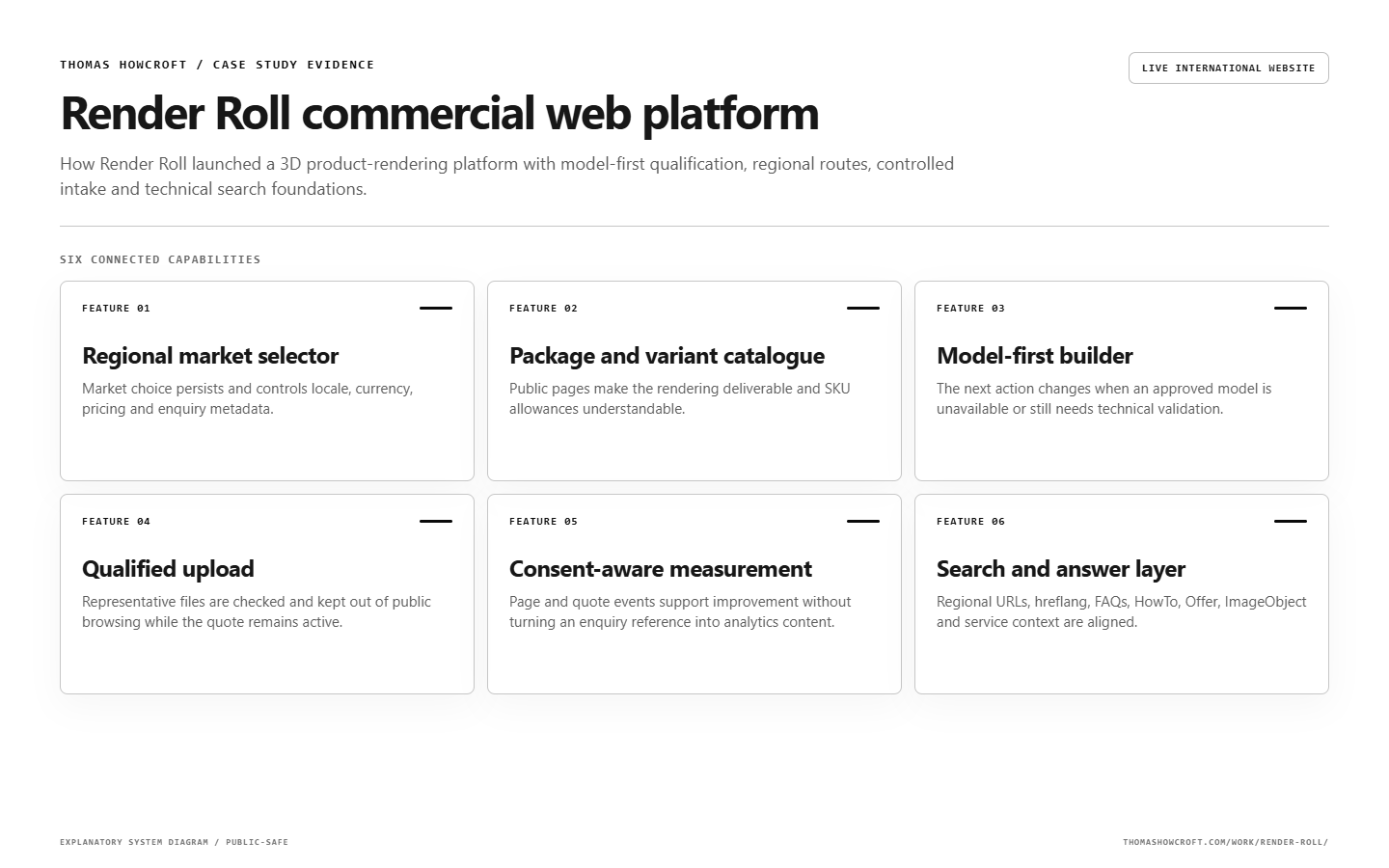
A visual summary connects the main product capabilities to the decisions, controls and user outcomes they support.
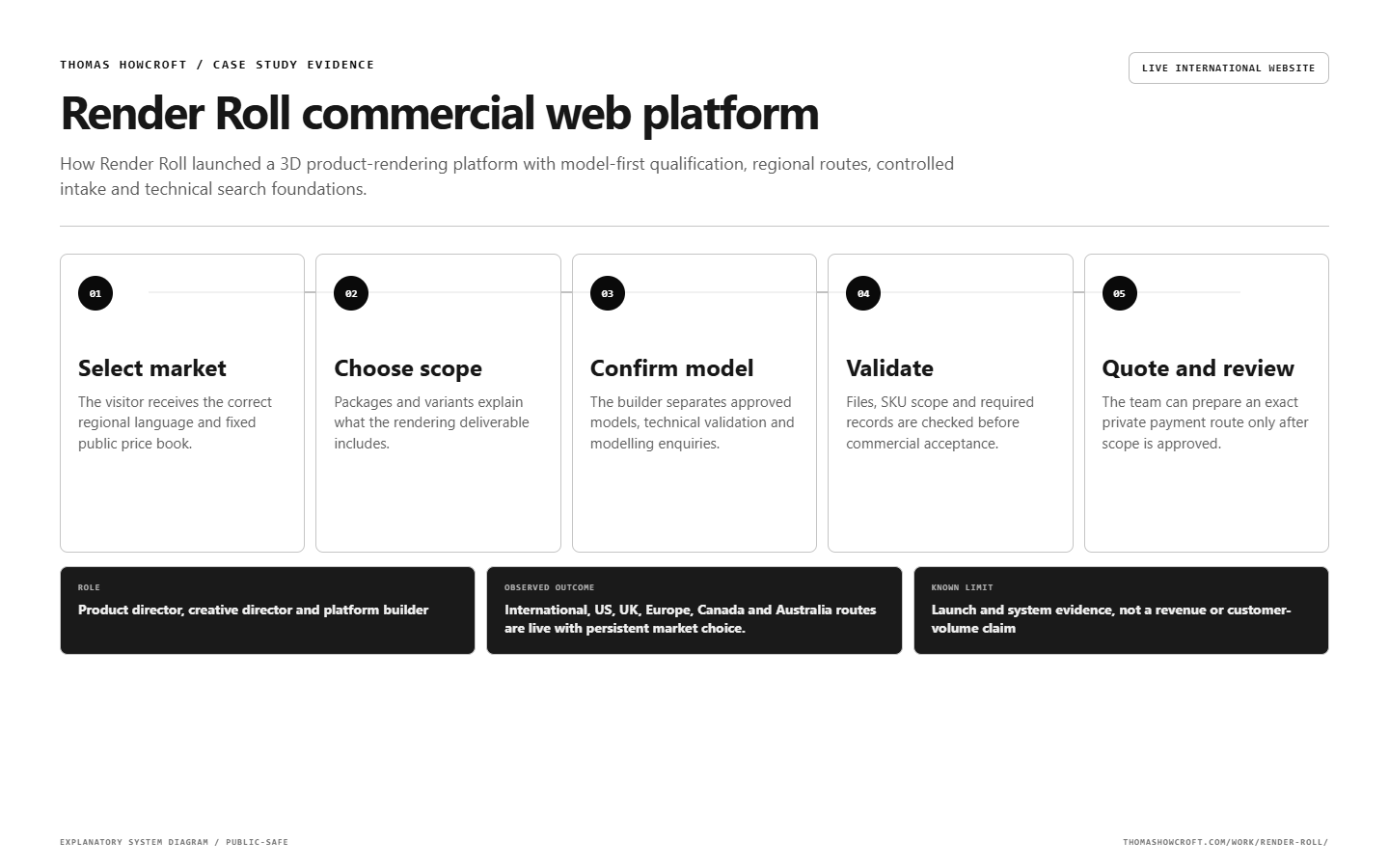
The complete working sequence shows how information moves from the first input to a checked and reviewable outcome.
The visible dashboard is only the decision surface. Context, data, permissions, review and learning determine whether it can be trusted.
Packages, variants and model complexity separate rendering work from the prerequisite modelling work.
Explicit market choice, locale, fixed prices and currency state remain aligned across page, form and analytics.
Model status, files and scope determine the correct enquiry or payment path.
Server-side validation, private access and deletion windows protect quote-stage files without advertising security internals.
Clear service content, FAQs, schema, image context, sitemaps and AI-readable summaries support public understanding.
A useful workflow names the input, owner, check, approval boundary and proof that closes the loop.
The visitor receives the correct regional language and fixed public price book.
Packages and variants explain what the rendering deliverable includes.
The builder separates approved models, technical validation and modelling enquiries.
Files, SKU scope and required records are checked before commercial acceptance.
The team can prepare an exact private payment route only after scope is approved.
Each feature exists because it changes a decision, reduces unsafe ambiguity or makes a failure easier to see.
Market choice persists and controls locale, currency, pricing and enquiry metadata.
Public pages make the rendering deliverable and SKU allowances understandable.
The next action changes when an approved model is unavailable or still needs technical validation.
Representative files are checked and kept out of public browsing while the quote remains active.
Page and quote events support improvement without turning an enquiry reference into analytics content.
Regional URLs, hreflang, FAQs, HowTo, Offer, ImageObject and service context are aligned.
The strongest evidence in an operating system is often the failure behaviour. These issues became design constraints and regression checks.
A rendering order could be misunderstood as including model creation.
Make approved CAD or 3D geometry a visible prerequisite and route non-model enquiries separately.
Separate routes could diverge in currency, wording or commercial metadata.
Use one fixed market price book and carry market, locale and currency through every layer.
A controlled enquiry exposed that the intended receiving mailbox was missing.
Create the mailbox, preserve forwarding and rerun both internal and customer acknowledgement paths.
Host caching could serve an older public state after release.
Disable the conflicting delivery mode, flush caches and verify remote files by content.
Commercial pages could name packages without answering buyer questions.
Differentiate titles and copy, add direct FAQs, page-aware schema and strong internal journeys.
A public case study should make it easy to see what is working, what remains internal and what has not been proven.
Every visual is labelled as a direct public product capture or an actual product capture with generic data. This is evidence of design and operating capability, not a promise of rankings, revenue, leads, productivity or a client outcome.
Strategy, interface, governance and implementation are treated as one operating problem rather than separate deliverables.
Each link adds a different layer of first-hand evidence rather than repeating the same page under another keyword.
Practical answers about the build, its use and its limits.
Yes. The international and regional public website routes are live.
No. The public journey qualifies the model and scope before a private payment route is prepared.
No. Every product, file and enquiry shown in the visuals is staged.
No. It reports launch, technical, search and enquiry-path evidence only.
A buyer-journey, search and measurement audit followed by a prioritised build brief. Handover: the findings, a prioritised plan and the evidence needed to decide the next step. Scope and schedule are agreed after the fit conversation.
Thomas can combine product definition, creative direction, qualification, international search and measurement into one public platform.