Live working beta
The public website and responsive beta application are live across phone and desktop.
Overshove is a live beta product for poker bankroll tracking, session review and study, supported by a public website and a governed AI growth operating system. Social sharing and server-backed leaderboard cohorts remain gated beta surfaces. The work spans responsive application engineering, product logic, offline behaviour, brand direction, search architecture, content operations and approval-led automation. The intended operating context is Web app, PWA, prototype, website, brand and growth operations. Thomas's role was Founder, product director and system builder. The case follows the product from its main operating problem through Live working beta, Offline-aware logging, Verified product logic, then connects each interface to a working feature and control. The evidence comes from live product, release checks, browser qa and governed operating views. It also records what failed, what changed and how privacy, evidence or approval boundaries are handled. The limit is explicit: acquisition, retention and commercial demand are not yet proven.
A direct account of the operating constraint, the product decision and the limits of the evidence.
A bankroll tracker looks simple until cash games, tournaments, staking, zero-profit sessions, multiple bankrolls and partial offline use meet. Players need fast logging during real life, but analysis must remain accurate enough to trust later. Community features add another layer of privacy and visibility rules.
The marketing problem was equally broad. A new product needed category education, international search structure, brand consistency, support and content output without publishing weak or unsafe material at scale. An AI content factory that merely produced more drafts would have created noise.
Overshove therefore became two connected products: a working poker application and a private growth operating system. The application protects session logic and user control. The operating system coordinates research, search, creative, review and publishing while keeping approval separate from publication.
| Primary job | Help active live players record, understand and improve their poker process. |
|---|---|
| Product surfaces | Bankroll, sessions, stats, study, notes, tools and account controls, plus gated social beta surfaces. |
| Growth surfaces | Marketing website, search estate, content review, CRM, support, analytics and site health. |
| Product states | Working v1 beta plus a separately labelled 43-screen v2 prototype. |
| Public evidence | Actual app views with fictional poker records. |
These are observed properties of the working system. They are not claimed percentages, revenue attribution or a guarantee of future performance.
The public website and responsive beta application are live across phone and desktop.
The app shell and queued logging support interrupted connections without pretending every record is already synced.
Cash, tournament, filter, security, privacy and responsive behaviours have release and regression evidence.
Read-only access and key lifecycle controls have passed disposable-account testing.
Canonical, hreflang, schema, sitemap, crawler and content-quality systems are operating.
The acquisition engine exists, but organic growth, sustained retention and demand remain unproven.
Every image preserves the interface purpose and control logic while replacing live people, projects, records and values with staged data.
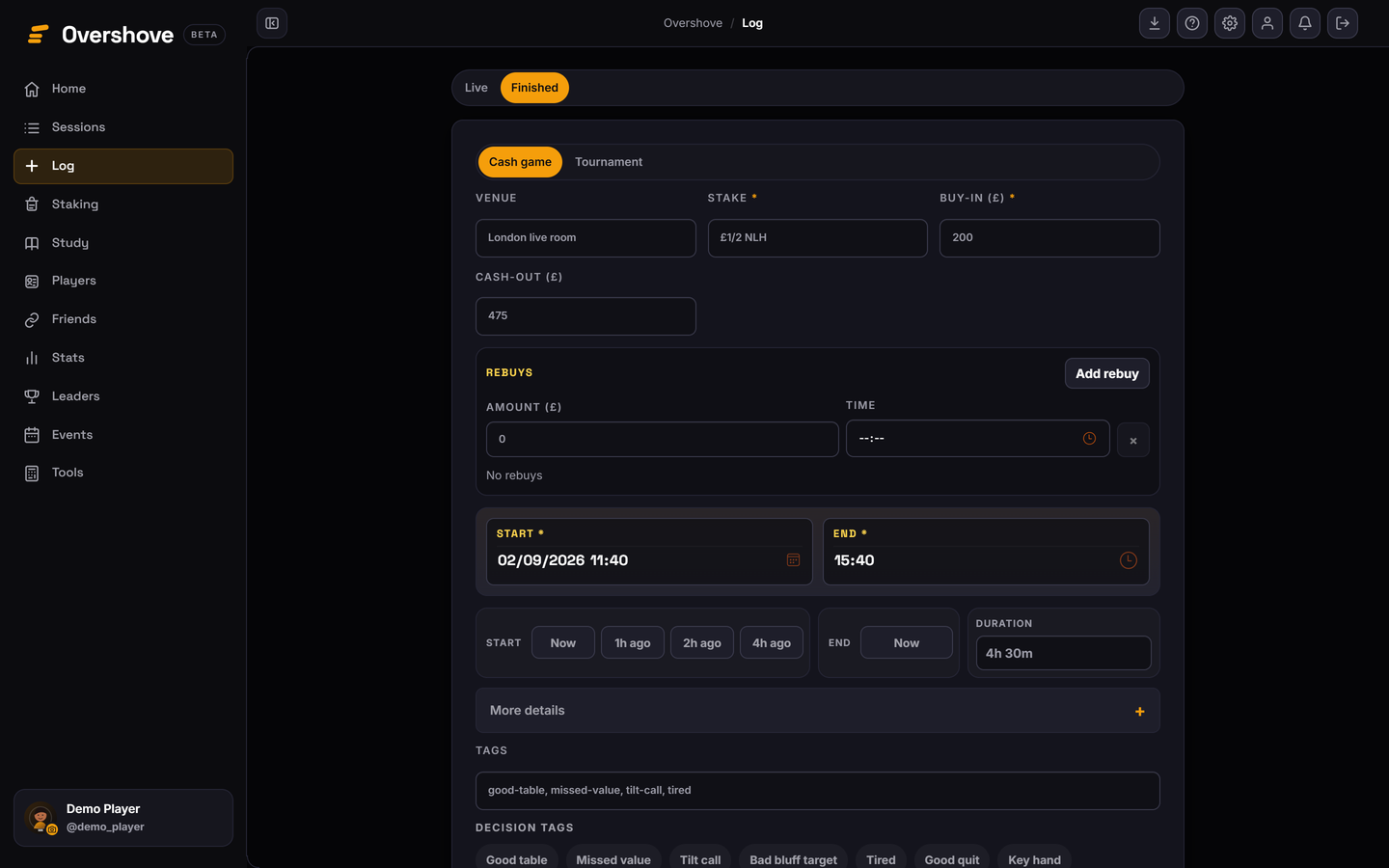
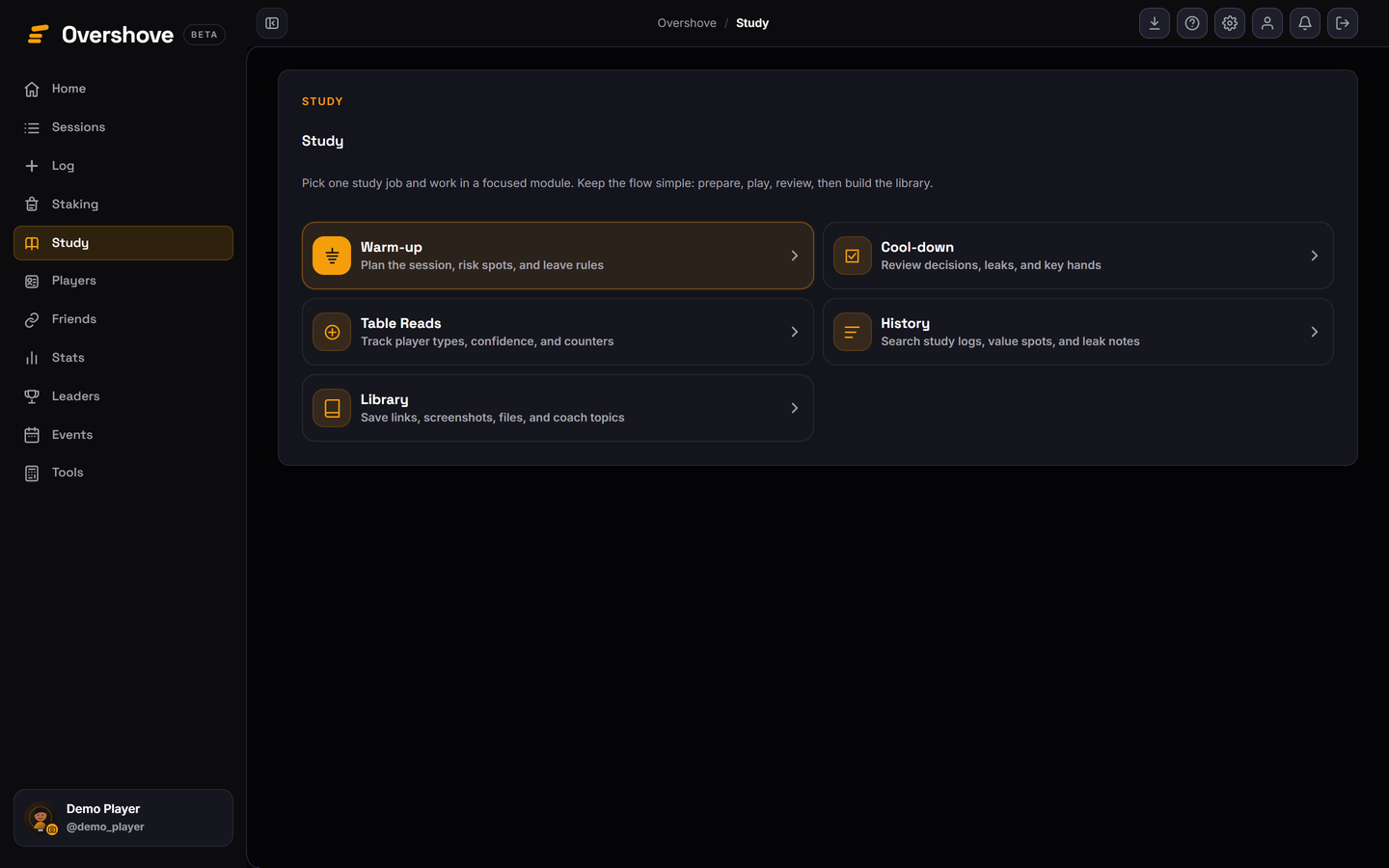

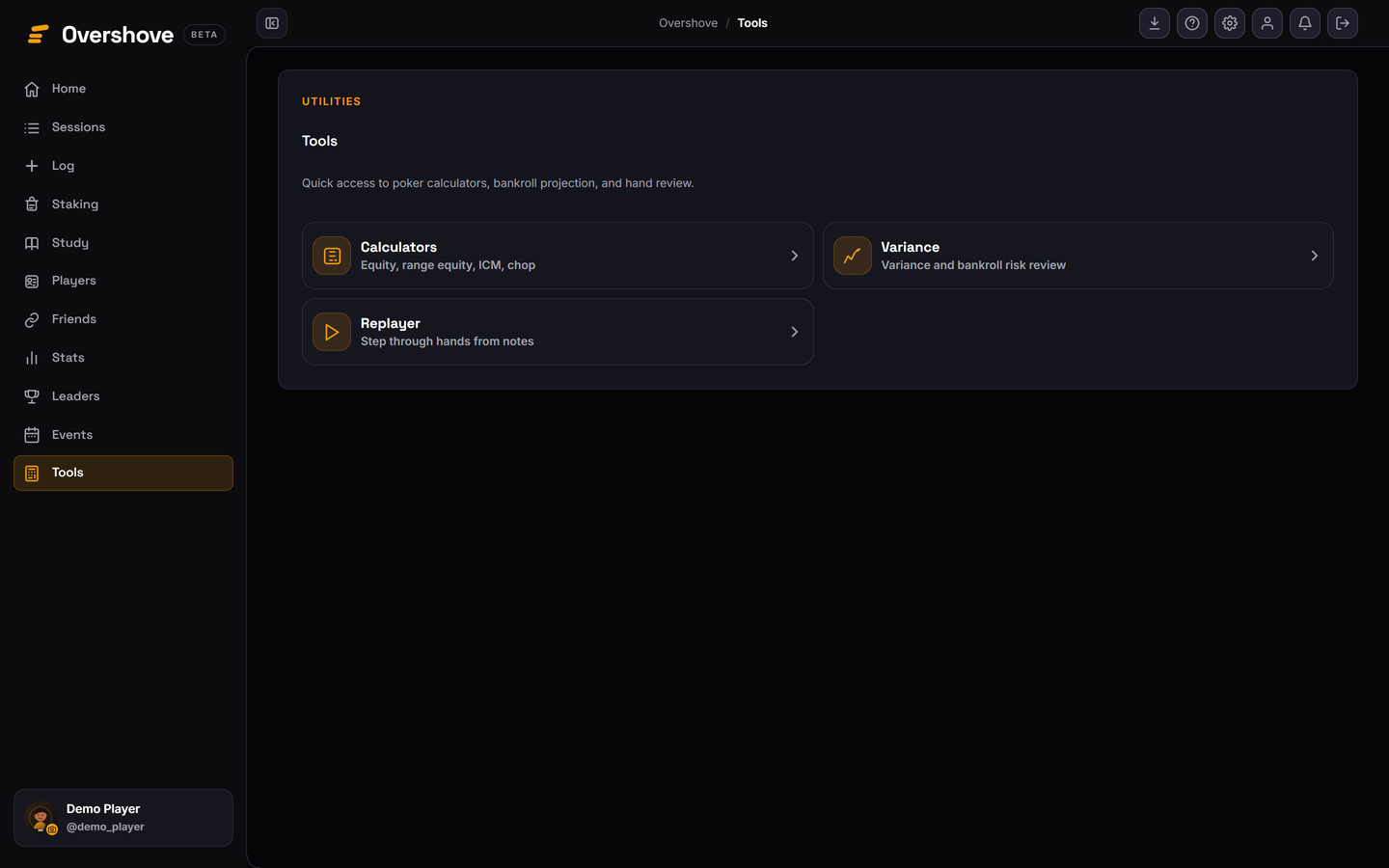

Each entry links to the exact view it describes. Product captures and explanatory diagrams retain their own evidence labels.
Cash and tournament rules remain visibly distinct in the staged flow.
A fictional hand review connects notes, warm-up and cool-down work.
Synthetic results demonstrate filters and uncertainty without implying profit.
The actual tools view brings the product's practical session utilities together.
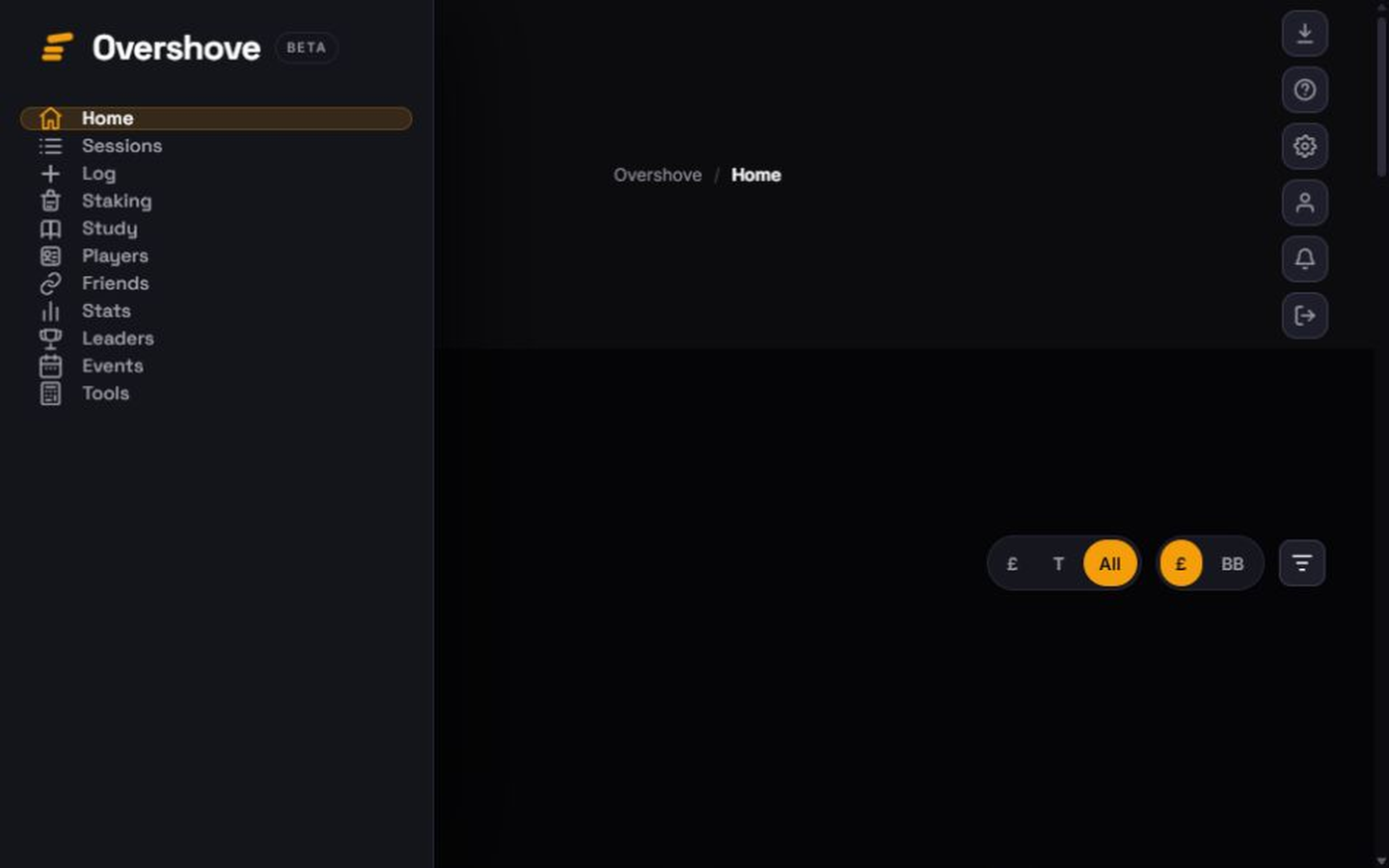
The home view combines bankroll state, recent sessions and sample quality without turning a short run into a performance promise.
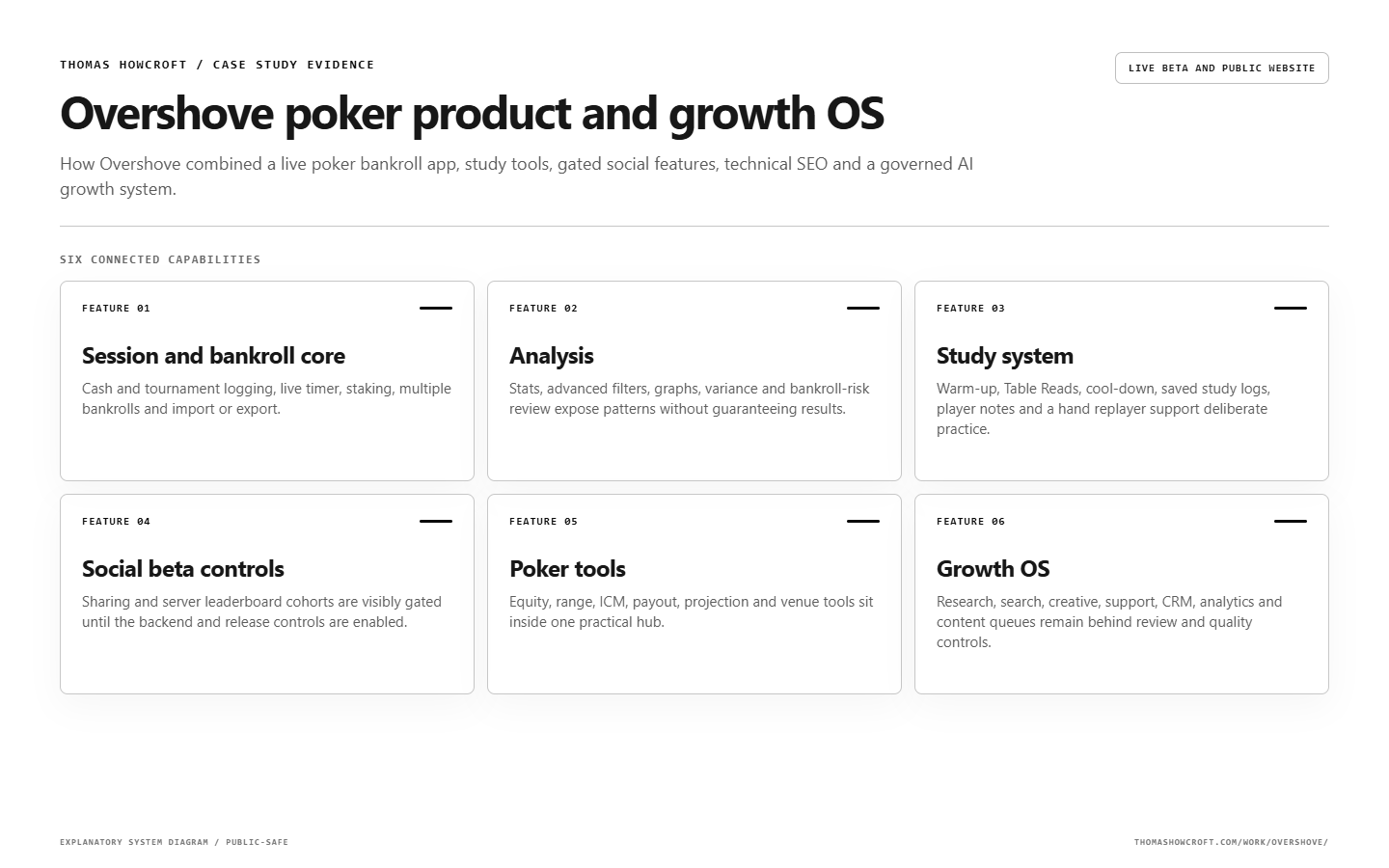
A visual summary connects the main product capabilities to the decisions, controls and user outcomes they support.
The complete working sequence shows how information moves from the first input to a checked and reviewable outcome.
The visible dashboard is only the decision surface. Context, data, permissions, review and learning determine whether it can be trusted.
Cash, tournament, staking, session and bankroll records keep the rules that change player interpretation.
Logging, analysis, study, notes and tools form one coherent workflow, while social functions stay visibly gated.
PWA state, cloud sync, privacy and API access preserve useful behaviour across connections.
Research, search, content, creative, CRM and support queues have owners and review states.
Security, privacy, responsive, claim and publishing checks fail closed before release or external action.
A useful workflow names the input, owner, check, approval boundary and proof that closes the loop.
A player records a cash or tournament session using rules appropriate to that format.
Stats, filters, variance and bankroll context turn records into an honest view of play.
Warm-up, Table Reads, notes and cool-down tools connect performance data to deliberate practice.
Social sharing and server leaderboard cohorts remain off or gated until their backend release checks pass.
Product signals, research and search opportunities enter the governed growth review rather than publishing directly.
Each feature exists because it changes a decision, reduces unsafe ambiguity or makes a failure easier to see.
Cash and tournament logging, live timer, staking, multiple bankrolls and import or export.
Stats, advanced filters, graphs, variance and bankroll-risk review expose patterns without guaranteeing results.
Warm-up, Table Reads, cool-down, saved study logs, player notes and a hand replayer support deliberate practice.
Sharing and server leaderboard cohorts are visibly gated until the backend and release controls are enabled.
Equity, range, ICM, payout, projection and venue tools sit inside one practical hub.
Research, search, creative, support, CRM, analytics and content queues remain behind review and quality controls.
The strongest evidence in an operating system is often the failure behaviour. These issues became design constraints and regression checks.
Cash and tournament sessions were being asked to share rules that do not mean the same thing.
Separate field logic and validation by game format.
Break-even sessions could be classified incorrectly.
Correct the filter semantics and add regression coverage around zero.
Signed-out and signed-in content could render together or navigate incorrectly.
Make authentication state explicit and test first paint, redirects and mobile navigation.
Caching could preserve stale code or disrupt logging.
Control cache versions, update order and queued work rather than relying on default browser behaviour.
Generated drafts existed but could not be properly seen or rejected in the review surface.
Connect draft production to exact channel previews, rejection learning and a separate publish gate.
A public case study should make it easy to see what is working, what remains internal and what has not been proven.
The visuals use actual app captures with the product's safe sample records. Social sharing and server leaderboard cohorts remain gated. The product does not promise poker profit, commercial demand, acquisition or retention.
Strategy, interface, governance and implementation are treated as one operating problem rather than separate deliverables.
Each link adds a different layer of first-hand evidence rather than repeating the same page under another keyword.
Practical answers about the build, its use and its limits.
Yes. The public website and beta web application are live.
No. Every player, session and value shown here is fictional.
No. It records and analyses process. It does not guarantee results.
No. Search and content infrastructure is working, while acquisition, retention and commercial demand remain to be proven.
A product diagnostic, critical-flow prototype and evidence-backed build plan. Handover: the findings, a prioritised plan and the evidence needed to decide the next step. Scope and schedule are agreed after the fit conversation.
Thomas can connect product decisions, application delivery, search, creative direction and governed growth into one inspectable operating model.